
AI, Robotics and Human Reskilling: The State of Hospitality Report 2025-2026 Published by Les Roches Spark
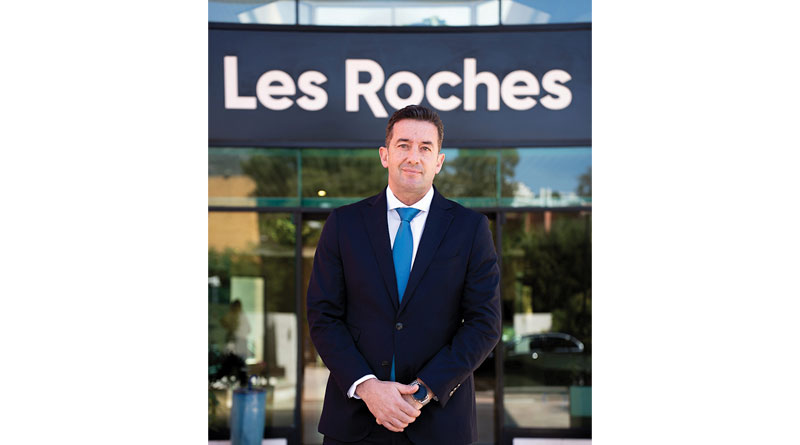
By Carlos Diez de la Lastra, CEO of Les Roches (https://lesroches.edu/)
Les Roches, a distinguished institution dedicated to fostering innovative and entrepreneurial leaders of tomorrow in the hospitality industry, has released its Spark research white paper, The State of Hospitality Report 2025–2026.
The report, authored by Dr Francesco Derchi, Associate Professor, with Dr Ivana Nobilo, Executive Academic Dean and Dr Rachel Germanier, Professor and Head of Faculty Development, identifies 2025 as the turning point where hospitality moves beyond recovery into structural, technology-driven transformation, with the global market surpassing $5 trillion (The Business Research Company, 2025) and projected to grow 5.5-6.5% annually (World Economic Forum, 2025) through the decade.
The study highlights three converging trends that will define competitive advantage in 2026 – and the urgent need for reskilled human talent to complement technology and deliver authentic guest experiences.
Trend 1: Asset-Light Expansion
Major hotel groups are shifting from asset-heavy models to lean luxury and lifestyle concepts. Strategic moves such as IHG acquiring Ruby Hotels, Marriott investing in citizenM, and Hyatt acquiring The Standard confirm that brand power and operational efficiency – not physical assets – drive value creation (IHG Hotels & Resorts, 2025; Marriott International, 2025; Hyatt, 2024).
Carlos Díez de la Lastra, CEO of Les Roches, explains: “Asset-light portfolios are now the growth engine. In 2026, success means scaling lifestyle concepts efficiently and leveraging technology to maximise margins.”
Leaders must understand capital-light economics and tech-enabled operations, requiring advanced training in digital strategy and experiential design.
Trend 2: AI-Native Distribution
Booking behaviour is being reshaped by AI agents. Platforms like Mindtrip and Layla AI, alongside generalist tools such as Google Gemini and ChatGPT, demand API-ready connectivity and loyalty-driven offers (Alphabet Inc., 2025; OpenAI, 2025; Skift, 2025).
By 2026, AI-enabled revenue management and cloud-native property systems will be mandatory infrastructure (Langham Hospitality, 2025; Marriott Tech Briefings, 2025). Dr Derchi notes: “The challenge for 2026 is clear: optimise for AI agents with clean data, secure APIs, and loyalty propositions that earn the recommendation.”
Hospitality professionals must acquire data literacy, AI integration skills, and digital marketing expertise to thrive in this new distribution ecosystem.
Trend 3: Robotics & Automation
Robotics is moving from novelty to necessity. Delivery and cleaning robots (e.g. Savioke Relay, LG CLOi, PUDU) are being deployed at scale, addressing labour shortages and improving margins (RobotLAB Deployment Reports, 2025; Pudu Robotics, 2025).
Market forecasts project ~25% CAGR to $1.84B by 2030 (Mordor Intelligence, 2025), signalling industrial maturity. Dr Germanier adds: “Automation frees staff for what matters most – empathy and experience. Robots handle repetitive tasks, while people deliver the human touch that defines hospitality.”
Leaders must learn automation management, robotics integration, and workforce redesign to balance efficiency with personalised service.
The Human Touch: Reskilling for Tech-Driven Hospitality
While technology sets the stage, human talent remains the differentiator. Dr Nobilo emphasises: “At Les Roches, we prepare students to lead this transformation – combining digital fluency with emotional intelligence and creativity. Reskilling is not optional; it’s the foundation for turning innovation into authentic guest experiences.”
“The next wave of success will be driven by convergence – asset-light economics, AI-first distribution, and automation – anchored by reskilled human talent,” adds Mr Díez de la Lastra.
The report concludes: “The winners of 2026 will be those who recognise that the new competitive edge lies not only in the convergence of asset-light portfolios, intelligence-first distribution, and automated operations, but also in the deliberate reskilling of talent as the execution layer of this model. By allocating strategy capital to both technology and human capability, leaders will build the integrated, AI-native, and asset-light hotel of the future. For 2026 and beyond, success will shift from siloed optimisation to systemic value creation, with integrated performance, powered by reskilled human talent, becoming the true measure of market leadership.”
Discover the full insights shaping hospitality in 2026. Download the complete report: https://lesroches.edu/wp-content/uploads/2025/12/Spark-The-state-of-hospitality-report-2025-2026-2.pdf.