
Wetherspoon Tells Customers to Switch Off Meta Glasses Cameras Over Privacy Fears
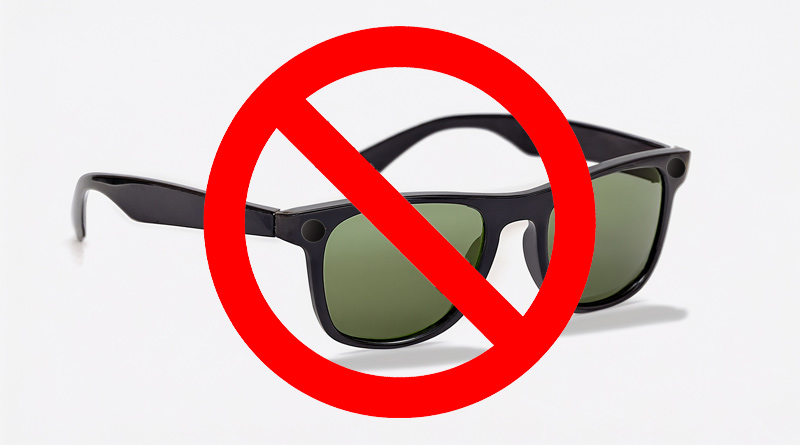
JD Wetherspoon has become the latest major hospitality operator to restrict the use of Meta’s camera-equipped smart glasses on its premises, instructing customers to disable the recording function before entering any of its pubs.
The move by the pub company, which operates more than 800 sites across the UK and Ireland, follows growing unease about the devices being used to film members of the public without their knowledge.
A spokesperson for the chain said Wetherspoon has long operated on the principle that customers and staff should not be filmed without their agreement, and argued that Meta’s glasses sit uneasily with that approach because they allow people to be recorded discreetly.
“Like many hospitality companies, Wetherspoon has CCTV cameras for security reasons, but their use is strictly controlled by data legislation,” the spokesperson said. “Apart from that, the general code that applies in our pubs, and most pubs, is that you can’t film customers or employees without their permission.”
The company said the glasses appeared to run contrary to that principle by making it possible to capture footage of people covertly, adding that its position was comparable to existing house rules discouraging customers from playing videos out loud in its venues, on the basis that both practices intrude on other people’s space.
Wider backlash over covert filming
The Wetherspoon policy adds to a growing list of concerns being raised about Meta’s smart glasses, which combine a built-in camera with everyday eyewear, allowing the wearer to record photo and video hands-free.
Although a small indicator light is designed to show when the device is filming, critics say it is easy for those nearby to miss the signal, meaning people can be recorded without realising it.
Campaigners and domestic abuse organisations, including Refuge, have voiced repeated concern that the technology could be exploited to harass or track women and girls in public spaces. Some women who discovered they had unknowingly been filmed while wearing the glasses have described the experience as distressing and intrusive.
The glasses have also been linked to a rise in so-called “pick-up” or prank-style content shared on social media, in which members of the public — often women — are filmed interacting with strangers without their consent before the footage is uploaded online.
Concerns about covert use have already prompted restrictions elsewhere. Several schools have banned the glasses from their premises, and organisers of major events, including Comic-Con operator Monopoly Events, have introduced similar bans in a bid to prevent attendees being filmed without permission.
Meta defends the technology
Responding to the criticism, a Meta spokesperson defended the product, saying the glasses were designed to be genuinely useful, supporting features such as music playback, real-time translation and hands-free calling.
The company also highlighted potential accessibility benefits, saying the technology could assist people with visual or hearing impairments, and warned that restricting its use more broadly risked being “a major step backwards” for such users.
Meta acknowledged that filming would not be appropriate in every setting, but argued that any restrictions should be applied consistently across similar devices. The company reiterated that its glasses include a light that activates during recording — a feature, it said, that conventional smartphones and cameras do not offer.