
Hotels Also Need To Be Considered In Any Business Rates “U” Turn Says Colliers
Hotels must be considered in the governments proposed “rethink” on any business rates says business rates specialists Colliers as its flawed business rates valuations are adversely impacting the hotels industry with rates bills due to soar.
Like pubs, the hotel industry is another “big loser” from the 2026 Business Rates Revaluation. Rateable Values (RVs) have increased by 76% across the country, according to the new draft list – with some increases for individual hotels reaching over 250%. According to Colliers this will have a big impact on liability (rates payable) from April when the list comes into force, despite the government’s transitional relief scheme.
The most impacted appear to be hotels in the major cities particularly those that are high end in value, where RVs have rocketed. By contrast in some seaside locations such as Cornwall, values are even decreasing as the table below shows:
| Hotel | Increase in RV |
| Leonardo Royal Hotel Birmingham | 79% increase |
| Holiday Inn Bristol City Centre | 160% increase |
| Premier Inn Cardiff City Centre | 259% increase |
| Dakota Hotel Leeds | 153% increase |
| Premier inn Manchester Central hotel | 267% increase |
| Hilton London Angel Islington | 113% increase |
| Residence Inn by Marriot W London | 197% increase |
| The Headland Hotel and Spa Newquay | 7% increase |
| Premier Inn Newquay | 1% decrease |
Actual rates bills (liability) are calculated by multiplying the hotel’s rateable value by the multiplier. The larger hotels are also subject to the higher 50.8 p multiplier (set for properties with an RV over £500,000).
The combination (high RVs and high multiplier) has resulted in rises so steep for these bigger hotels, that the government has introduced a transition scheme limiting rises in actual bills. In year one (2026-27) properties will an RV over £100,000 will find their bills capped at 30%, in 2027-8 at 25% (plus inflation) and 2028-29 25% plus inflation.
Without any transitional relief taken into account The Premier Inn in Kensington for example would be due to see a 295% increase on its rates bill this year and Premier Inn in Manchester Central a 236 % increase. These have now been capped to 40% and 30% rises. However, such percentages are still high when added to current bills.
Taking this transitional relief and other supplements into account, as well as inflation impacting the multiplier in years ahead, Colliers has come up with some typical examples of the impact of the caps and how they will affect bills in 2026 and in the subsequent years of the list as the table below shows:
| Hotel | RV 2023 List | RV 2026 List | % RV increase | Liability (Rates Bill) + 2025/6
|
Liability 2026/7 With caps applied | % Liability increase | Liability 2027/8 | Liability 2028/9 | Total % Liability increase over the 3 years |
| Canopy by Hilton London City | £1.23m | £4.79m | +287% | £710,700 | £1.09 m | +54% | £1.34m | £1.66 m | +133% |
| Premier Inn London Kensington | £182k | £785k | +331% | £104,650 | £147,013 | +40% | £183,944 | £230,212 | +120% |
| Bristol Marriot
Royal Hotel |
£724k | £1.26 m | +74% | £401,820 | £522,366 | +30% | £655,200 | £667,800 | +66% |
| Dakota Manchester | £291k | £1.64k | +464% | £161,505 | £209,957 | +30% | 269,007 | £342,984 | +112% |
| Leonardo Royal Hotel, Birmingham | £665k | £1.19m | +79% | £369,075 | £479,980 | +30% | £614,741 | £631,760 | +71% |
+assuming no RHL rates relief- if applied the rises would have been higher
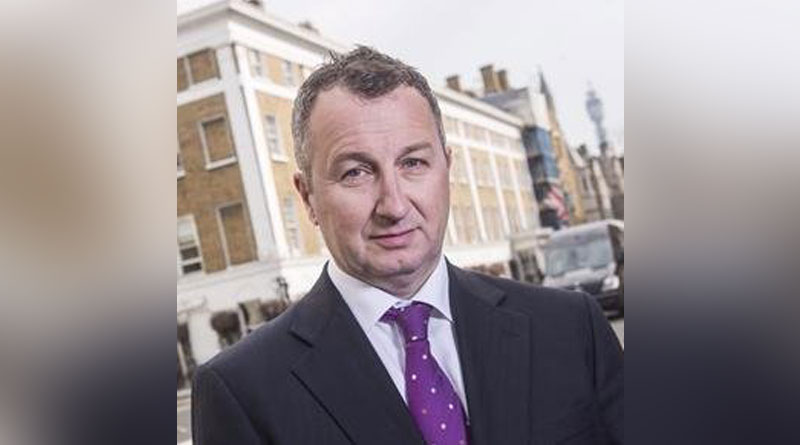
According to John Webber, Head of Business Rates at Colliers,
“There has been a lot of publicity about the impact of the business rates rises on the smaller independent hotels who are losing their reliefs this year. But as our figures show the bigger hotels will be highly impacted too. On the surface the caps look generous and will certainly limit the worst of the liability rises, particularly in year one. But then when you realise you have a 30% cap on a liability that’s actually gone up 300%, it’s not such a great win for the longer term.”
The caps will also taper off during the list at the same time as the multiplier rises with inflation – so by the final year of the list hotels could be facing some significant liability rises as the table shows.”
Webber adds, “It’s also important to note that anyone currently building or investing in a new hotel due to open after April 1st, 2026, will not benefit from these caps. They will be immediately facing the full higher multipliers and new higher revaluation -with bills that could be 200 or 300% more than if the hotel was open today. It will create a two-tier market. No wonder the industry is screaming, and developers are considering their next move.”
To avoid future higher bills, Colliers believes that hotel occupiers need to look at their rateable values for both the 2023 and the new 2026 list and attempt to get their RVs down. Some of the biggest rises are because the 2023 list reflected 2021 Covid values, but Webber believes that list was built on sand, given it was difficult for the VOA to properly assess in lockdown. Colliers is advising its clients they have 3 months left to challenge the 2023 list and set values at the right level.
Webber also believes some of these high valuations reflect a fundamental flaw in the way hotels are valued for business rates purposes. He claims, “The VOA is supposed to be using the R&E (Receipts& Expenditure) method of valuation, but in reality, it uses a shortened method which appears to ignore the “E”. These valuations don’t seem to be taking into account that the costs for hotels have gone up considerably – even if their turnover is higher. The whole system is flawed.”
Webber added, “ While some increases in valuations were not unexpected in the new list, many of the increases do not appear to be an accurate representation of value and will present some appeal opportunities. We are advising our clients accordingly. It would be better to try and reduce the RV rises now rather than be lulled into relying on any liability increases being capped, especially as these caps won’t last for ever.”
“As ever this is another example of government acting on the hoof and not considering the consequences of its actions – just making a complicated system even more difficult to interpret and understand. A lot of this could have been avoided if they’d carried out a proper impact assessment of their proposals.”
Unless the government does a “U” turn in the same way it is indicating it will do with pubs, the industry will certainly suffer increased costs likely to be fed back to the consumer. In some cases, potential investors and developers will be deterred from investing or building new. In other cases, existing hotels may be considered unviable. These changes certainly won’t support the growth agenda which we have all been promised.”