How The Bear Inn Solved Its Grease Management Problem Without Breaking the Bank
For independent pub operators across the UK, the convergence of post-pandemic recovery, soaring energy costs, and increased national insurance contributions has created a perfect storm of financial pressure. Add intensified enforcement from Local Water Authorities (LWAs) regarding fats, oils, and grease (FOG) management, and many single-owner businesses find themselves caught between regulatory compliance and economic survival.
The Bear Inn in Pagham, an 18th-century coaching inn, recently faced exactly this dilemma—and found a solution that other independent operators can learn from.
The Challenge
The combined effects of recent economic pressures, including the COVID-19 pandemic, escalating energy costs, and increased national insurance contributions, have placed considerable strain on the financial sustainability of small hospitality enterprises.
Furthermore, intensified oversight and enforcement by the Local Water Authority (LWA) have underscored the critical importance of regulatory compliance, particularly in a region with a longstanding history of fats, oils, and grease (FOG) accumulation and associated drainage blockages.
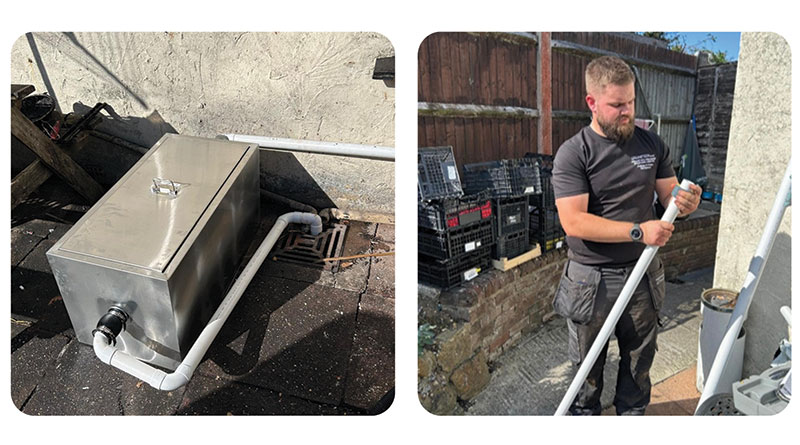
The historic pub’s existing grease management system had become a liability. An undersized, malfunctioning passive grease trap was leaking across the rear yard, creating slip hazards and attracting rodents whilst failing in its primary purpose: preventing FOG from entering the sewer system.
The Solution
In collaboration with various stakeholders, including the LWA, ECAS, relevant manufacturers, and the management of The Bear at Pagham, a tailored grease management solution was developed:
A thorough site survey was conducted to assess the specific grease management needs of the establishment.
Based on the findings, a cost-effective passive grease trap was selected, providing equivalent compliance to a grease removal unit at roughly one third of the cost.
A quarterly service contract was established to ensure regular cleaning, prevent blockages, and maintain compliance with LWA regulations.
Comprehensive training was provided to the landlord and staff on proper system use, including food basket maintenance & general cleanliness, with a scoop supplied for removing larger debris.
Results That Matter
• Cost-Effectiveness: The affordable solution significantly reduced the financial burden on The Bear at Pagham while maintaining full compliance with LWA standards and regulations.
• Prevention of Blockages: The installation of the grease trap and a proactive maintenance plan will help mitigate the risk of future FOG-related blockages in the village.
• Stakeholder Satisfaction: All stakeholders, including the LWA, ECAS, and external auditors, were consulted with in a collaborative effort and recognised and agreed on a realistic, effective solution which is compliant and affordable.
A follow-up visit is scheduled three months post-installation to conduct the first quarterly maintenance and cleaning, ensuring the system continues to operate effectively. The successful implementation of this solution serves as a model for other single-owner operators in similar situations facing regulatory pressures and financial constraints.
As the pub’s owners noted: “As a family-run pub, compliance matters but staying on top of it cost-effectively hasn’t been easy. Grease Tech Solutions changed that… In today’s climate, that kind of support is rare and invaluable.”
This case illustrates how effective collaboration among stakeholders can result in a sustainable, compliant, and economically feasible grease management solution. By focusing on the unique needs of single-owner-operated businesses, the project not only addresses compliance but also supports the financial viability of vital community establishments.
For operators seeking guidance on grease management compliance, GreaseTech Drainage Solutions can be reached at 01227 776 066 or fog@gtd-solutions.com