
73% of Outlets Report A Year-On-Year Decline in Profitability
THE (SLTA) Scottish Licensed Trade Association today releases its bi-annual snapshot survey, highlighting the continued challenges facing Scotland’s pubs, bars and licensed hospitality venues in the light of continuing rising costs, and a lack of business and consumer confidence.
Conducted in January, the survey’s responses represent over 400 pubs, bars, restaurants and hotels, covering the full spectrum of licensed hospitality businesses and contains key insights into the continued challenges facing hospitality, driven by costs increasing significantly above inflation, and visitors having less disposable income.
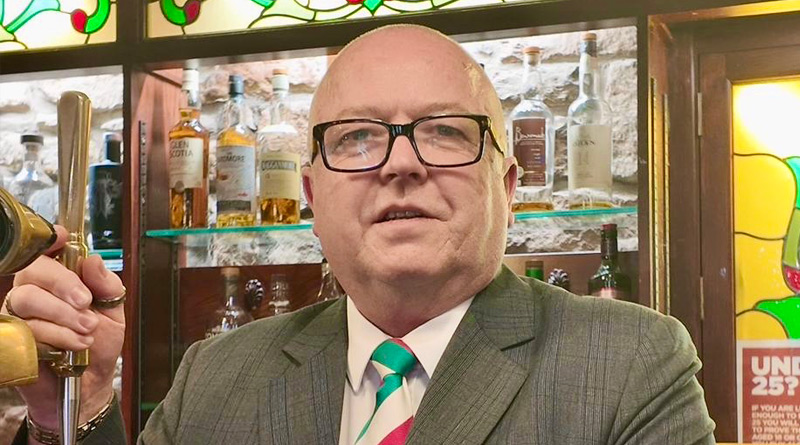
Colin Wilkinson, SLTA managing director, said: “The hospitality industry continues to face a very challenging economic environment. Even with all the furore and hype of Scotland’s participation in the World Cup 2026, only 40% of outlets believe extended hours during the competition will assist their business.
“A combination of costs rising significantly above inflation and consumers with lower disposable incomes adds up to a very difficult market for one of Scotland’s key industries and major employers. One of our biggest challenges is a higher cost base, as hospitality businesses in Scotland face higher rates and energy charges than our counterparts across the rest of the UK.
As Scotland prepares for Holyrood election in May, the SLTA calls on all political parties to ensure economic growth is one of their key policies. “Our report highlights that over 86% of our respondents do not think the economic policies of either the Scottish or UK governments are aligned to growing their businesses,” said Mr Wilkinson.
“We cannot operate in an environment where 14% of respondents are planning to or are considering closure, so we urge all parties within the Scottish Parliament to place early rates reform, and within the Westminster Parliament a reduction in VAT for the licensed hospitality sector, at the heart of their economic strategies.”
He added: “If the Republic of Ireland can reduce hospitality VAT to 9% and the Ulster assembly can recognise all the negative impacts of their recent commercial rates revaluation, and take immediate remedial action on this, then both the Scottish and Westminster governments need to ‘walk the talk’ when it comes to the sustainability of Scotland’s licensed hospitality sector.”
“The Westminster government has recognised the need to focus more direct support for pubs in England and has given additional funding for this particular sector. With additional funding coming to Scotland through the Barnett consequentials, we urge – in the strongest terms – that this additional financial support flows directly through to the Scottish licensed hospitality sector and is not diluted to other sectors, or even worse diverted away for other purposes as in the past.
“The outcome of a meeting with the Scottish Government Minister for Public Finance, Ivan McKee MSP, on Thursday will confirm the level of commitment the Government truly has to support the licensed hospitality sector in Scotland.
“This is essential to ensure the sector remains viable and continues to be not only a key contributor to the tourism sector and the Scottish economy in general, but also a major employment provider.”
Executive summary of key insights:
• Trading in 61% of retailers declined in 2025 vs 2024. However, there was a slightly improved performance over the festive period with only 54% showing decline.
• Profitability is a major concern with 73% of outlets down versus the prior year and 42% declining by over 10%.
• Increases in the costs of energy, national insurance, together with lower footfall, are the biggest challenges facing hospitality.
• Staff availability remains an issue. However, versus our previous survey, there is a reduction of 7pp in the number of outlets where trading is impacted.
• 68% of outlets face cost increases of over 10% – this is significantly above UK inflation rates and ultimately non-sustainable.
• The economic outlook is not positive with 72% of outlets expecting economic decline in 2026.
• Over 86% of retailers view that neither the Scottish or UK governments’ economic policies are aligned with business growth.
• 72% of retailers expect trading stability or slight decline in 2026. Worryingly, 14% are planning to or are considering closure.
• Forecast profitability in 2026 shows some positives with 63% expecting to break even or be profitable.
• Only 40% of outlets believe extended hours during the 2026 World Cup will assist their businesses.
• Rates reform and reducing hospitality in VAT are the two biggest things the Scottish and UK governments can do to support the sector.
• Stouts, low-alcohol drinks and cocktails will be the big trends in 2026.