
Core Lager Still Holds Strong Role in UK Pubs Despite Premiumisation, Report Finds
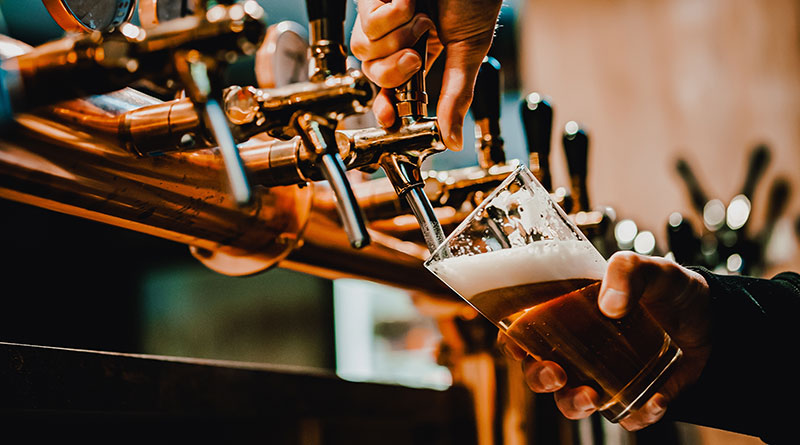
Core lager continues to play a significant role in Britain’s pubs, bars and clubs despite the growth of premium and craft beer, with value, familiarity and the drinking occasion emerging as key factors influencing consumer choice.
That is one of the central findings of The Pour Report, a new study published by Molson Coors examining the role of core, or standard-tier, lager in the UK on-trade.
According to the report, core lager accounts for 35% of total beer volume sales in the on-trade. Its research found that 41% of lager drinkers always or often choose standard-tier lager over premium or craft alternatives, while 24% said they would rarely choose it.
The report suggests that, rather than simply competing with premiumisation, core lager can provide a familiar starting point for consumers while allowing operators to offer a broader range of beers.
Among those who choose core lager, 66% said they considered it to offer the best value for money compared with other types of beer, while 5% disagreed.
Familiarity was also found to be important. More than half of lager drinkers – 52% – said they were more likely to visit a venue if it stocked a lager brand they recognised.
When their usual drink was unavailable, standard-tier lager was also identified as the most popular fallback option, with respondents being 56% more likely to choose it than spirits and mixers.
Value Remains Central
The findings come against a backdrop of continuing pressure on household finances and changing attitudes towards drinking out.
Among consumers who said they had changed how often they chose core lager, cost of living and financial hardship were the most commonly cited reasons.
Price and taste were the two leading factors in choosing core lager, cited by 42% and 40% respectively. Familiarity was identified by 27%, brand reputation by 23% and promotions by 20%.
The report also challenges the assumption that younger consumers are necessarily the most price-conscious.
More than half – 53% – of core-lager drinkers aged over 55 said price was a key factor in their drinks choice, compared with 29% of Gen Z respondents.
At the other end of the age spectrum, visibility appears to have greater significance. Some 18% of Gen Z core-lager drinkers and 24% of millennials said visibility at the bar or on the shelf affected their choice, compared with 11% of Gen X respondents and 10% of those aged over 55.
Familiar Brands Can Encourage Experimentation
One of the more interesting findings is that familiar brands may not necessarily work against premiumisation.
Almost half – 48% – of lager drinkers said they were more likely to try something different if a familiar core lager was also available.
The report argues that a recognisable brand can therefore act as a “safety net”, giving consumers confidence to experiment with other products while ensuring that a familiar option remains available.
Group occasions also appear to be an important opportunity for operators. Almost half of lager drinkers – 47% – said they were more likely to consider a venue for a group event if it offered a good selection of recognisable standard-tier lagers.
Sport Continues to Drive Beer Sales
Major sporting events remain particularly important occasions for lager.
The research found that Christmas socialising was the occasion most strongly associated with core lager, cited by 40% of respondents, followed by summer drinks at 35%, nights out at 34%, barbecues at 32%, major sporting events at 27% and bank holidays at 22%.
Summer was the period when 41% of lager drinkers said they were most likely to purchase lager, although 31% said they consumed it equally throughout the seasons.
Operators interviewed for the report highlighted the importance of sporting occasions, with England football matches, rugby internationals and major tournaments identified as particularly strong trading opportunities.
Terry Wheatley of Heavitree Brewery, which operates 40 pubs in the South West, said sporting events continued to be an important driver of core-lager sales, while stressing the importance of preparation, beer quality and consistency.
The report also highlights the potential of promotions linked to major sporting events, with operators reporting success from instant-reward initiatives.
The Experience Still Matters
While price remains important, the research suggests consumers are not simply looking for the cheapest pint.
Asked what would improve their pub lager experience, 26% cited music and atmosphere, 24% promotions and 21% faster service. Better seating was identified by 19%, while 17% said better glassware would improve their experience.
There was a notable generational difference.
Only 12% of 18–24-year-olds said there was nothing that would improve their pub lager experience, compared with 38% of those aged over 55.
The findings point towards the wider importance of the overall hospitality experience, rather than simply the product being served.
The report’s operator panel also emphasised the importance of basic service standards, including clean beer lines, appropriate glassware, trained staff and consistent pouring.
The Human Element
Despite the increasing use of technology across hospitality, the research also identifies the role played by bar staff in influencing purchasing decisions.
Operators interviewed for the report said many customers still approach the bar simply asking for “a pint of lager” rather than specifying a particular brand.
That leaves staff with an opportunity to influence the final choice and potentially introduce customers to other products.
The report suggests that recognised core brands can provide an easy starting point for that conversation, while also potentially providing an opportunity to trade customers up when appropriate.
A Changing Market
The findings underline the increasingly complex job facing operators when deciding what to put on the bar.
Consumers now have a wider choice of premium, craft, flavoured and alcohol-free products, while health, moderation and value are all playing a greater role in purchasing decisions.
At the same time, the research indicates that established lager brands retain a substantial customer base and remain particularly relevant for community pubs, sports-led venues and social occasions.
Molson Coors’ research concludes that core lager should therefore be viewed as part of a broader beer strategy rather than simply as an alternative to premium products.