
Chancellor Delivers Spring Statement as Financial Pressures Mount for Hospitality Operators
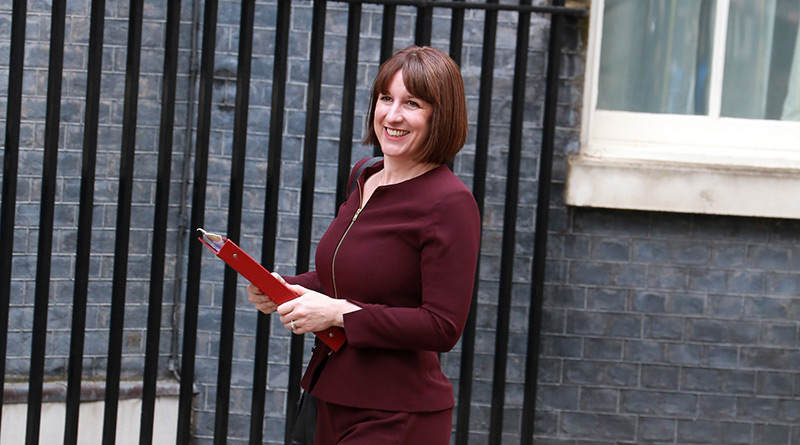
Chancellor Rachel Reeves has stood firmly behind her government’s economic programme, telling MPs it remains the correct course of action for the country — even as fresh global instability rattles financial markets and raises fresh concerns for cost-pressured businesses across the UK’s hospitality and licensed on-trade sector.
Addressing the House of Commons to deliver her Spring Statement, Ms Reeves acknowledged that the economic backdrop had darkened considerably in recent days, telling parliament that her plan had become “even more important” given the rapidly shifting global landscape.
Renewed conflict in the Middle East has driven oil and gas prices sharply higher, triggering a sell-off in UK government bonds and leading traders to scale back their forecasts for interest rate reductions from the Bank of England — unwelcome news for pub, bar, restaurant and hotel operators already grappling with elevated borrowing costs and squeezed margins.
The Chancellor opened her address by reaffirming her administration’s direction of travel, insisting the government had the right economic framework in place to navigate the uncertainty ahead.
Michael Kill, CEO, Night Time Industries Association said: “Today’s Spring Statement talks about stability and cautious optimism. But this is not a stable moment – and businesses will not be reassured by rhetoric after two years of relentless pressure.
“Across the UK, major brands and corporates are collapsing at pace. Confidence is fragile. Margins are exhausted. Investment has stalled.
“At the same time, we are heading toward another energy price shock. Escalating tensions in the Middle East have already driven Brent crude to $80 a barrel. LNG prices have surged by 30%. Wholesale markets are reacting sharply. For energy-intensive sectors like hospitality, leisure and the night-time economy, this is not abstract economics – it is an immediate and compounding threat.
“Consumers are under unprecedented strain. The cost of daily living remains high, household bills are rising again, and disposable income is at a low ebb. When consumers pull back, our sector feels it first and hardest. Fewer nights out. Reduced spend. Shorter dwell time. Lower margins. Businesses cannot grow when customers are simply trying to get by.
“At the same time, youth unemployment remains a serious concern. The night-time economy has long been a gateway employer for young people – offering flexible, entry-level roles that build skills and pathways into long-term careers. Yet the increase in National Insurance Contributions and rising employment costs have made it harder, not easier, to sustain those jobs. We are squeezing the very sectors that absorb and train young talent.
“Business rates reform and limited relief measures have compounded the pressure. By narrowly targeting support at pubs and live music venues, the Government has marginalised late-night bars, clubs, event spaces and cultural operators – all vital to local economies and high streets. The burden remains disproportionate and unsustainable.
“The visitor economy faces additional headwinds. Geopolitical instability threatens inbound tourism, particularly from eastern markets, while energy and supply chain costs continue to erode already wafer-thin margins.
“Against this backdrop, talk of “stability and positivity” feels disconnected from the reality on the ground. Businesses do not need reassurance – they need decisive intervention.
“And the political context cannot be ignored. Following the recent by-election results, the May 7th local elections will arrive quickly. Communities are paying close attention to jobs, high streets and local economic vitality. The night-time economy is central to all three.
“If growth is truly the Government’s mission, then meaningful action must follow.
“Start with a VAT cut for hospitality and the night-time economy – a proven lever that stimulates demand, protects jobs, restores confidence and ultimately increases tax revenue through economic activity.”
Taking to social media Night Time Economy Adviser Sascha Lord said “Why does this Chancellor hate Hospitality so much?
“Not a single mention of it in the Spring Statement. And as for “helping young people,” her Budgets have cost the sector 120,000 jobs. The vast majority being young people.”