
The £95 Restaurant Ripple Effect: How Dining Out Drives Spending Beyond the Bill
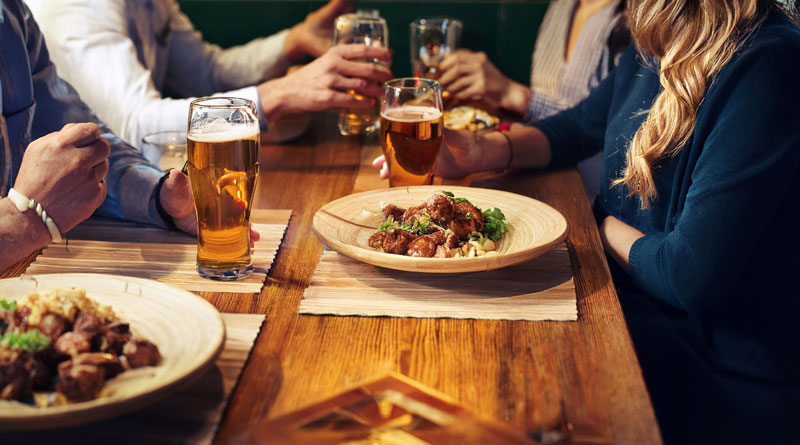
OpenTable has launched its 2026 Restaurant Impact Report, new research exploring the vital role restaurants play in local economies, communities and everyday life, and the role diners can play in helping them thrive.
The findings demonstrate that restaurants power far more than dining, they drive spending and footfall for surrounding businesses and creating spaces where people come together and reconnect. The report explores the realities restaurants are navigating, including the impact of no-shows, and how small actions from diners can make a meaningful difference.
Among the findings:
- Dining out has an economic ripple effect: 56% of UK diners spend at neighbouring businesses before or after their meal, averaging £95.¹
- Restaurants bring people together: 98% say local restaurants are important to their community, while 71% of Gen Z are likely to book a meal out to feel better or reconnect when they feel stressed or low.¹
- Supporting restaurants goes beyond the bill: Among Gen Z diners who made a restaurant reservation in the past year, 57% admit to no-showing at least once. However, a no-show table for two costs £55.70 on average according to restaurant workers,² and 48% say understanding the financial impact of a no-show would make them more likely to honour or cancel a booking.¹
“Restaurants are so much more than places to eat, they create jobs, bring people together and play an important role in the life of communities across the UK,” explains Sasha Shaker, Senior Director of Restaurant Sales and Service, OpenTable UK and Ireland. “This report showcases the industry’s wider impact and highlights why restaurants matter and why OpenTable is dedicated to advocating for their success.”
Restaurants Fuel Employment and Local Economies
More than half (56%) of UK restaurant diners said they spent money on other activities the last time they ate out locally. Those who spent elsewhere alongside their meal spent £95.20 on average, rising to £126 among Gen Z and £118 among Millennials. Restaurants see the impact first-hand, with 51% of hospitality workers saying their restaurant drives footfall or spending at nearby businesses.
According to UKHospitality, hospitality is the UK’s third-largest employer, with restaurants employing 1.3 million people and contributing £44 billion to the economy annually.³
Restaurants Drive Community and Personal Wellbeing
Restaurants are spaces where people meet, celebrate and connect, more than half (56%) of UK diners are likely to book a meal out to feel better when stressed or low, rising to 71% of Gen Z.¹ If their favourite local restaurant disappeared tomorrow, 53% would miss the atmosphere and character it brings.
Dr Martha Newson, Associate Professor of Psychology at the University of Greenwich, explains: “Sharing a meal at a restaurant is one of the oldest ways of bringing people together, because sitting around a table lets us focus on each other. Our research with over 10,000 people worldwide found face-to-face contact remains a strong predictor of wellbeing, as social bonds deepen through eye contact and shared experiences.”
The Balancing Act for Restaurants
While restaurants support their local areas, they are also navigating significant pressures. If VAT were cut from 20% and restaurants passed the saving on through lower menu prices, 39% of diners would eat out more often, while a further 22% would spend more when they did.¹
If the reduction in hospitality VAT takes place in April, restaurants are considering how they could use the savings: 42% would primarily use a VAT saving to protect or increase staff wages and hours, 31% would lower menu prices for customers and 30% would reduce how often they need to raise prices.²
Hospitality Works Both Ways
Although 83% of diners recognise that failing to honour a reservation can harm a restaurant’s business,¹ no-shows remain a challenge for restaurants. Restaurant workers estimate a no-show for a table of two costs an average of £55.70 in lost revenue.
The impact goes beyond lost revenue, 60% of restaurant workers say no-shows have led them to turn away other bookings, while 48% cite wasted food and stock.²
There are however positive signs, with overall UK no-show rates down 6% year-over-year.⁴
OpenTable is making that relationship easier to navigate. Diners can modify or cancel reservations, or message restaurants directly in the app. Restaurants can manage demand and minimise no-shows with tools such as deposits, credit card holds, prepaid Experiences, automated reminders and online waitlists — restaurants using deposits saw a 60% drop in no-shows globally this year.⁵
For diners, supporting restaurants can be as simple as showing up – or cancelling as soon as plans change. Because when a table is filled, the impact extends far beyond the restaurant, helping the people, businesses and neighbourhoods around it thrive.
Andy Hayler, renowned restaurant critic and one of the world’s most experienced diners, said: “Having eaten in restaurants all over the world, I’ve had the chance to see what goes on behind the scenes. I know just how much work goes into every service. As a diner, a bit of thoughtfulness goes a long way. Turn up on time, be kind to the people looking after you and don’t book several restaurants for the same night when you only plan to eat at one. It really can be as simple as that.”
The full OpenTable Restaurant Impact Report 2026 is available at [2026 Restaurant Impact Report | OpenTable for Restaurants].