
Government to Review Workplace Heat Rules as Hospitality Braces for More Extreme Temperatures
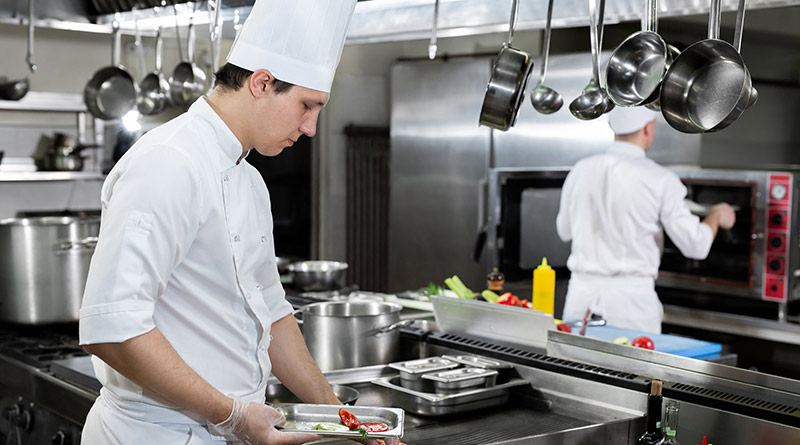
Operators across pubs, bars, restaurants and hotels have been given fresh reason to keep a close eye on kitchen and front-of-house conditions this summer, after the Department for Work and Pensions (DWP) confirmed plans for a public consultation on workplace temperature rules — just as the UK endures its third heatwave of 2026.
With forecasters predicting highs of 36C this week and yellow and amber heat-health alerts covering the whole of England until Saturday evening, the timing puts renewed pressure on an industry where kitchens, cellars and service areas are already some of the hottest working environments in any sector.
Unlike minimum workplace temperatures, there is currently no legal upper limit on how hot a workplace can get in the UK. The Health and Safety Executive (HSE) has long argued that a blanket maximum isn’t practical, given that in many workplaces — hospitality kitchens being a prime example — high temperatures are generated by the nature of the work itself rather than the weather alone.
That said, employers still carry a clear legal responsibility to protect staff wellbeing, regardless of what the thermometer says. For hospitality businesses, that duty of care extends to chefs working service in front of hot equipment, bar staff on packed summer floors, and housekeeping teams working in un-air-conditioned rooms.
The prospect of change moved a step closer this week after Labour MP Alex Mayer, representing Dunstable and Leighton Buzzard, tabled a parliamentary question asking ministers what assessment had been made of the impact of heatwaves on staff in outdoor and high-temperature workplaces.
Responding on behalf of the DWP, minister Sir Stephen Timms confirmed that the HSE — Great Britain’s workplace health and safety regulator — will this year launch a public consultation on proposed updates to the Approved Code of Practice for the Workplace (Health, Safety and Welfare) Regulations 1992. Workplace temperature is expected to be a central part of that review.
Timms noted that employers already carry a legal duty to properly assess heat-related risks to staff, and pointed to HSE guidance issued in June encouraging businesses to manage those risks as the current run of hot weather continues.
A House of Commons research briefing published in June also acknowledged that temperatures in some sectors have become “regularly unacceptably high,” with government committing to modernise guidance on extreme-heat working conditions — a description that will resonate with anyone who has stood over a grill station during a summer lunch service.
The TUC has been pushing HSE for some time to go further, calling for a formal review of guidance. Its proposal would require employers to act to bring down temperatures once conditions pass 24C and staff report discomfort, with workers able to down tools entirely once temperatures hit 30C — or 27C for those in physically demanding roles, a category that would likely capture much of a busy kitchen brigade.
Government has so far stopped short of committing to a fixed legal maximum. In a Lords debate on extreme heat last year, Baroness Anderson declined to commit HSE to setting an upper limit, instead reiterating that workplaces must provide a “reasonable” indoor temperature for staff.
For licensed and hospitality venues, the direction of travel is worth watching closely. A formal consultation raises the possibility of firmer obligations around ventilation, rest breaks, hydration provision and heat-risk assessments — areas many operators already manage informally during busy summer trading, but which could become more clearly defined in regulation.
In the meantime, the current legal position remains unchanged: there is no statutory maximum temperature, but the existing duty to assess and manage heat risk to staff still applies in full.
The Met Office has said temperatures should start easing from this weekend, offering some respite to kitchens and beer gardens alike, though it stopped short of forecasting a swift return to more typical summer conditions.