
Restaurants Return to Growth in March But Pub Sales Slow as Cost Fears Mount
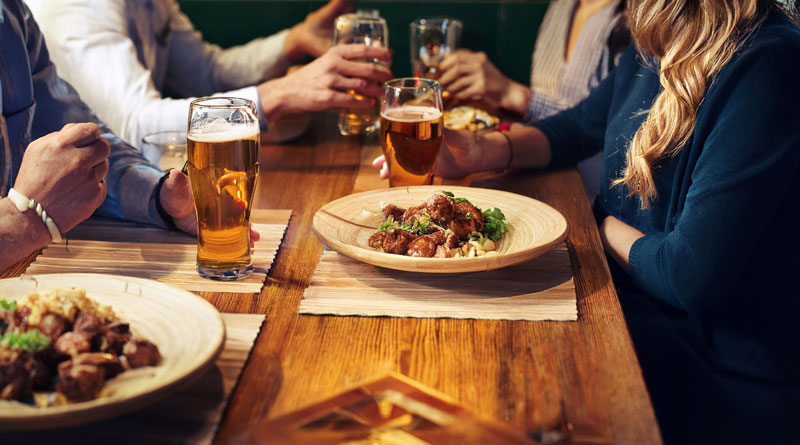
Britain’s restaurant groups finished a difficult first quarter with modest like-for-like growth in March, the new NIQ RSM Hospitality Business Tracker reveals.
The Tracker—produced by NIQ, powered by CGA intelligence, in association with RSM—shows restaurants’ sales in the month were 2.5% ahead of March 2025. It is a welcome sign of consumers’ readiness to eat out, especially on big occasions like Mother’s Day.
Pub groups meanwhile achieved a like-for-like increase of only 0.2% in March, despite a boost from St Patrick’s Day celebrations in the middle of the month. It was the first time that restaurants have outpaced pubs for growth for 16 months. Managed bars saw trading fall by 2.6% year-on-year, while there was marginal growth of 0.9% in the on-the-go segment.
When channels are combined, Britain’s leading managed hospitality groups achieved like-for-like growth of 0.9% in March. While this is a better performance than either January or February, it is well below Britain’s recent rate of inflation. January or February, it is well below Britain’s recent rate of inflation.
The NIQ RSM Hospitality Business Tracker also indicates the continued cautious expansion of managed groups. On a total sales basis—including at venues launched by hospitality groups in the last 12 months—their sales rose 4.3%—just ahead of inflation. NIQ’s recent Business Confidence Survey with Zonal found nearly two thirds (63%) of leaders of groups with five or more sites planned to increase their estate over the next 12 months.
Despite openings and real-terms growth, hospitality remains overwhelmed by high costs in key inputs like food, drink and labour. There are also fears of renewed inflation as a result of ongoing uncertainty in the Middle East, which is likely to push up prices in many energy-related areas. NIQ’s recent Business Confidence Survey—conducted before the start of the conflict—found that fewer than a third (31%) of leaders feel optimistic about the future of hospitality over the next 12 months.
The Tracker’s regional breakdown of sales meanwhile indicates a slightly better March for operators in London. Like-for-like sales rose by 0.4% within the M25, and by 1.1% further afield.
Karl Chessell, director – hospitality operators and food, EMEA at NIQ, said: “Restaurants’ move back into the black in March is a welcome development after a very challenging start to the year. Nevertheless, many groups remain reliant on new openings and deliveries for real-terms growth, and geopolitical concerns are casting a long shadow over the months ahead. Hospitality faces relentless challenges that are not of its own making, and without targeted government support it is likely to be a challenging summer season.”
Saxon Moseley, head of leisure and hospitality at RSM UK, said: “Sluggish like-for-like growth across the sector masks a change in fortunes for Britain’s eateries, with restaurants returning to growth at the expense of food-led pubs. However, the bigger picture suggests consumer spending has not increased significantly but is instead shifting between different segments of the market, highlighting the degree of competition amongst operators. The data also shows that overall revenue growth is being driven by new openings rather than underlying like-for-like performance, favouring larger operators with the capital to expand, while many independent businesses continue to grapple with underwhelming site revenue growth alongside rising cost pressures. With new entrants vital to the evolution of the hospitality sector, creating the right conditions for businesses of all sizes to grow is critical to maintaining a diverse and resilient hospitality industry.”