
St Austell Brewery CEO Warns of Budget Threat to Pub Industry
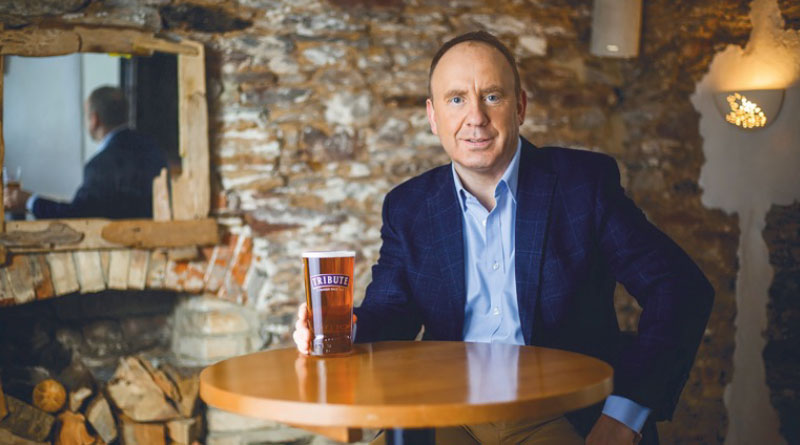
The head of a major regional brewery has raised serious concerns about government fiscal policy following last week’s Budget statement.
Kevin Georgel, who leads St Austell Brewery as chief executive, has published an open letter expressing alarm at measures announced by the Chancellor that he believes will significantly harm Britain’s pub trade.
The family-owned brewing company, now in its sixth generation of operation, runs a substantial estate of over 160 licensed premises alongside two brewing facilities across south west England.
In his statement, Georgel draws particular attention to changes in business rates policy, which he describes as placing severe additional strain on an already challenged sector. The CEO emphasises that licensed premises operators are facing unprecedented financial pressures that could prove unsustainable.
The intervention calls on Westminster to reassess the recent Budget measures, with Georgel arguing that current policies risk widespread consequences including potential job losses, damage to local community hubs, reduced capital investment in the sector, and an existential threat to traditional British pubs.
The concerns reflect growing unease within the hospitality industry about the cumulative burden of taxation and regulatory costs facing venue operators. Trade bodies have previously highlighted that pubs face disproportionately high business rates compared to other retail and leisure businesses.
The letter reads:
“After most Budgets, there is a tendency for industry leaders to respond in the immediate aftermath. This time, I felt compelled to stand back, analyse the detail – particularly the long overdue changes announced to the business rates system – and respond today with a greater degree of reflection.
We had initially approached this Budget with a degree of optimism – hoping the Government would finally grasp the seriousness of the pressures facing Great British pubs and honour its own manifesto commitment to support our sector. But weeks of damaging speculation drained that optimism, replacing it with fear about what the Chancellor would announce when she finally stood at the despatch box. And now, after taking time to absorb the detail, the conclusion is stark. This Budget heaps yet more cost and pain on a sector that simply cannot bear it.
For months, our industry bodies have been speaking with the Treasury and providing clear, factual evidence to reinforce the reality of our sector’s precarious state. We have repeatedly asked for breathing space from what is already the most heavily taxed sector within our economy. Instead, the Government has chosen to impose even more punitive taxes on businesses that support jobs, communities and local economies across the UK.
Worse still, the Chancellor has tried to claim business rates are going down. This is misleading to people across the country who know the importance of local pubs to their communities and want to see these businesses being supported, not taxed out of existence.
Business rates are not going down. A small cut to the multiplier hides the truth – rateable values are rising sharply and justified reliefs are being scrapped. From April 2026, hardworking publicans will face average business-rate hikes of 76%, phased over three years. This is equivalent to an extra £13k per annum in additional tax. And these increases have nothing to do with rising profits – pub profits are falling. Revenues are only up because we’ve been forced to raise prices to try and keep pace with inflation, soaring utilities and steep rises in employment costs. This includes above inflationary increases in the National Minimum Wage and the changes to National Insurance announced at last year’s Budget, which were extraordinarily damaging for the pub industry.
Yet ministers still appear to confuse revenue with profit. At a recent roundtable, held for tourism and hospitality businesses across Cornwall, one MP openly questioned why we needed Government intervention when “revenues were growing”. It fell to the rest of us to explain the basics – higher turnover does not mean higher profit.
Transitional relief will not soften the blow either, as the Government claim. This is misleading. It will merely delay it, draining any recovery in confidence as support tapers away and huge increases bite. Publicans, here in the south west and across the country, will therefore see any potential recovery in their profitability eaten up over the next three years.
The Government had promised to rebalance business rates by justifiably shifting more of the burden onto large online retailers, while providing some much-needed respite for pubs and the wider hospitality sector. This move would also have helped shape consumer understanding around business rates, and how they are structured – including our own loyal customers. In reality, the Government has done the opposite. Pubs will face average increases of 76% over the next three years and giant warehouses, used by multinational online retailers, just 16%. How can that decision possibly be justified?
Before the Budget, a £5 pint already included £2.03 of tax. After all other costs, publicans were left with just 13p of profit per pint. After the increase in business rates, higher wage costs and beer duty, the tax take – already over 40% – is rising again. The result is inevitable – higher prices for customers, fewer jobs and less investment.
As a sixth-generation family business approaching its 175th year, we plan for the long term and are fortunate to have supportive shareholders, who back the investments we are making across our business. Investments to support sustainable growth for future generations. Yet even a business like ours – with financial stability and supportive shareholders – will be forced to significantly scale back our investment plans, because of the choices made in this and last year’s Budgets.