
Budget Offers Business Rates Relief to Pubs and Hospitality – But Surcharges Remain
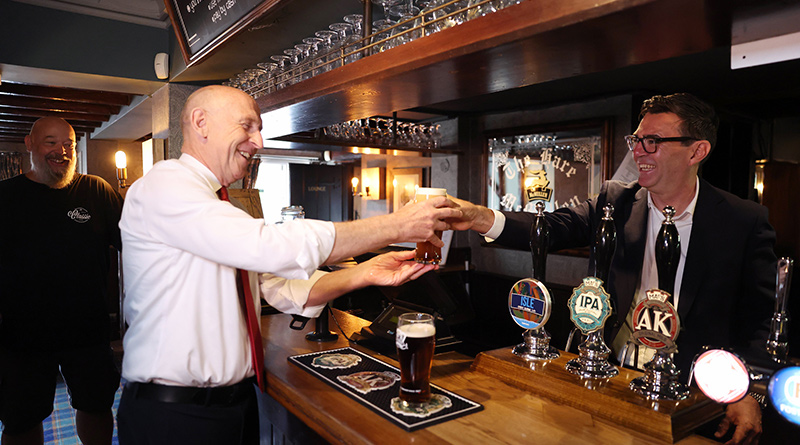
Hospitality businesses in England are set to benefit from an expanded package of business rates support announced in the Budget, with the Government raising the thresholds for small business relief and promising greater protection against steep increases in bills.
The measures are intended to help pubs, restaurants, cafés and other qualifying retail, hospitality and leisure (RHL) businesses manage property costs at a time when operators continue to face pressure on margins and investment.
Under the proposals, the threshold for 100% Small Business Rates Relief for qualifying RHL properties will rise from £12,000 to £18,000 in rateable value from April 2027. The upper threshold for tapered relief will increase from £15,000 to £21,000.
The Government estimates that approximately 70,000 additional businesses will pay no business rates as a result of the higher thresholds.
Budget documents also indicate that a further 3,500 pubs, 3,900 restaurants and 2,200 cafés will become eligible for full relief from April 2027.
For businesses that continue to qualify for support but face rising bills following revaluation, the Chancellor has also announced a cap limiting increases to Consumer Prices Index (CPI) inflation alone over the next two years, replacing the more generous increases permitted under the existing transitional arrangements for qualifying properties.
The Office for Budget Responsibility (OBR) estimates that the additional retail, hospitality and leisure measures will reduce business rates receipts by approximately £1 billion across 2027/28 and 2028/29.
Pubs and live music venues receive additional support
The wider package builds on the Government’s earlier commitment to provide additional business rates relief for pubs, social clubs and qualifying live music venues in England from April 2027.
That measure provides a further 20 percentage points of relief for eligible venues, bringing the total reduction in business rates liability for qualifying businesses to 35% under the announced arrangements.
The Treasury estimates that the additional support will save the average pub more than £3,000 over the relevant period.
The increase in the Small Business Rates Relief thresholds also extends assistance to smaller operators beyond those covered by the dedicated pub and live music venue measures.
For independent hospitality businesses, the extent of the benefit will depend on their rateable value, eligibility for relief and the interaction between different elements of the business rates system.
The changes apply to England. Business rates policy is devolved, and arrangements in Scotland, Wales and Northern Ireland differ.
Ryan welcomes protection against steep increases
Property tax specialists Ryan welcomed the proposed restrictions on transitional increases, describing the inflation-only cap as a significant intervention for businesses facing higher liabilities following revaluation.
Alex Probyn, Practice Leader, EMEA Property Tax at Ryan, said the measure would provide operators with greater certainty when planning expenditure and investment.
Replacing the existing caps with an inflation-only limit for qualifying increases is intended to prevent businesses from facing steep rises in their bills while transitional arrangements remain in force.
Under the current system, properties with a rateable value above £100,000 can face increases of up to 25% plus inflation in the relevant transitional period. The new protection would restrict qualifying increases to inflation alone.
Probyn said the change would give retailers and hospitality operators a firmer basis on which to plan, invest and protect employment.
He added that the measure represented meaningful breathing space for businesses of different sizes operating on the high street.
Higher relief thresholds offer welcome assistance
Ryan also welcomed the increase in the thresholds for Small Business Rates Relief, although the firm argued that the change partly restores support that has been eroded by inflation and rising assessed rental values.
According to Ryan’s analysis, successive September CPI increases have compounded to 42.7% over the period relevant to annual uprating between April 2017 and April 2027.
Separately, the firm estimates that the aggregate increases in assessed rateable values arising from the 2023 and 2026 revaluations amount to approximately 28.1%, based on published draft-list figures.
These are separate calculations and should not be interpreted as a direct measure of the increase in an individual operator’s business rates bill.
Changes in rateable value can affect eligibility for relief even where a business has not expanded its premises or increased its profitability.
Probyn said higher thresholds were welcome but argued that businesses should not lose relief simply because their assessed rental values had increased.
For hospitality operators, the practical effect will depend on individual property valuations and the reliefs available to them. Businesses should therefore assess their own circumstances rather than assume that the headline changes will translate into a uniform reduction in costs.
Transitional supplement extended
Despite welcoming the additional support, Ryan raised concerns about the decision to extend the separate 1p Transitional Relief Supplement through 2027/28 and 2028/29.
The Budget does not increase the existing 2.8p high-value supplement, but the extension of the 1p charge means that some businesses will continue to pay an additional amount towards the cost of transitional relief.
The supplement was originally introduced for 2026/27 to help fund the transitional arrangements for businesses affected by the revaluation.
Ryan estimates that a property with a rateable value of £1 million remaining liable for the supplement would incur an additional £10,000 a year, equivalent to £20,000 over the two-year extension, before other adjustments.
Probyn said maintaining the high-value supplement at its existing level honoured one commitment, but extending a separate charge that had been expected to end would create additional costs for affected businesses.
He argued that certainty required businesses to be able to rely on the scheduled end of a tax as well as the rate at which it was charged.
Other measures will help fund the package
The Budget also includes changes intended to contribute towards the cost of the wider business rates measures.
Machine Games Duty will rise from 20% to 25% from April 2027 for machines with stakes above £1 or prizes exceeding £100. The existing rate will be retained for lower-stake machines, a decision intended to limit the impact on pubs and seaside arcades.
Vape shops will lose eligibility for Small Business Rates Relief and the retail, hospitality and leisure business rates multipliers. Adult gaming centres will also lose eligibility for the latter.
The Government is additionally pursuing tougher VAT enforcement for online marketplace sellers as part of its wider approach to tax compliance.
Alongside the business rates changes, the Budget sets out plans to increase the proportion of business rates revenue retained by local and regional government. Mayors are expected to receive a 20% share of locally retained business rates from April 2027, with a share of income tax receipts also due to be devolved from 2028.
The proposals form part of a wider programme of devolution intended to give local leaders greater control over funding and investment in their areas.
Strategic authorities and mayors will also be given powers to introduce an overnight visitors’ levy from 2028, potentially affecting hospitality businesses offering accommodation.