
Company Insolvencies Dip Slightly in June, but Hospitality Sector Still Bearing Brunt of Economic Pressures
The number of registered company insolvencies in England and Wales stood at 1,845 in June 2026, broadly in line with May’s figure of 1,849, and 10% lower than the 2,048 insolvencies recorded in June 2025, according to the latest data.
Of June’s total, 276 were compulsory liquidations, 1,364 were creditors’ voluntary liquidations (CVLs), 191 were administrations and 14 were company voluntary arrangements (CVAs). No receivership appointments were recorded during the month.
CVLs fell 3% compared with May and were down 15% year-on-year, while compulsory liquidations dropped 2% month-on-month and 15% compared with June 2025. CVAs fell sharply, down 44% on May’s figures. Administrations, however, rose by 45% month-on-month, a spike largely attributed to around 60 connected companies in the real estate sector entering administration during June.
Over the 12 months to 30 June 2026, one in 198 companies – a rate of 50.5 per 10,000 – entered insolvency, down from 52.4 per 10,000 in the year to June 2025. While this marks a continued rise from the historic lows seen during 2020 and 2021, the rate remains well below the peak of 113.1 per 10,000 recorded during the 2008-09 recession, a difference partly explained by the number of companies on the effective register more than doubling over that period.
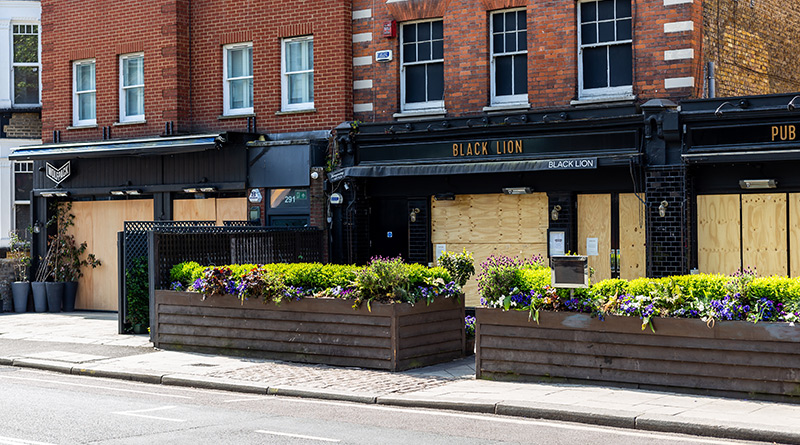
The data also shows that the accommodation and food service, wholesale and retail trade sectors combined accounted for 6,696 insolvencies – 29% of the total – in the year to June 2026, underlining the continued pressure facing hospitality and consumer-facing businesses.
Political Uncertainty Compounds Sector Pressures
Commenting on the figures, Giuseppe Parla, Restructuring & Insolvency Director at Menzies LLP, warned that ongoing political change is adding further strain to an already challenging trading environment for UK businesses.
“Amid the transition to a new Prime Minister and continued debate over proposed tax reforms, businesses are facing a period of heightened uncertainty. With key fiscal policies yet to be confirmed, many organisations are unable to plan ahead with confidence,” he said.
“While hospitality has benefited from increased consumer spending in pubs, driven by England’s World Cup campaign and longer opening hours, this relief is only temporary, and long-term issues facing the sector must be addressed by the incoming government.”
Parla pointed to business rates as a particular burden for hospitality and retail operators, compounded by rising National Insurance contributions, labour, energy and food costs.
“The longer these industries wait for announcements on relief measures, the longer they continue to accrue increased costs without clear foresight on how their bottom lines will be affected,” he said. “If confirmed by the incoming government, proposed cuts to business rates could offer much-needed relief following several challenging years, and could prevent businesses from being forced to further increase costs for customers or cut staff in response to high taxation.”
He added that proposed changes to the personal Income Tax allowance could offer some relief for individuals, though any impact is unlikely to be felt in the near term. Meanwhile, proposals around Council Tax and Stamp Duty have added further uncertainty to an already subdued property market, with fewer house sales and longer transaction times reflecting continued caution among buyers and sellers.
“With the summer period set to bring significant political and economic changes, businesses should review their position and seek professional guidance to ensure they are ready to adapt as changes are announced,” Parla concluded. “In a challenging economic environment, taking expert advice at the first sign of distress opens more options to protect value, preserve jobs and secure long-term financial stability.”